Real Estate Tips May 15, 2025

Why Buyers Are More Likely To Get Concessions Right Now


Especially in areas where inventory is rising, both homebuilders and sellers are sweetening the deal for buyers with things like paid closing costs, mortgage rate buy-downs, and more. In the industry, it’s called a concession or an incentive.

What Are Concessions and Incentives?

When a seller or builder gives you something extra to help with your purchase, that’s called either a concession or an incentive.

  • concession is something a seller gives up or agrees to in order to reach a compromise and close a deal.
  • An incentive, on the other hand, is a benefit a builder or seller advertises and offers up front to attract and encourage buyers.

Today, some of the most common ones are:

  • Help with closing costs
  • Mortgage rate buy-downs (to temporarily lower your rate)
  • Discounts or price reductions
  • Upgrades or appliances
  • Home warranties
  • Minor repairs

For buyers, getting any of these things thrown in can be a big deal – especially if you’re working with a tight budget. As the National Association of Realtors (NAR) says:

“. . . they can help reduce the upfront costs associated with purchasing a home.”

Builders Are Making It Easier To Buy

It’s not just one builder willing to toss in a few extras. A lot of builders are using this tactic lately. As Zonda says:

“Incentives continued to be popular in March, offered by builders on 56% of to-be-built homes and 74% of quick move-in (QMI) homes, which can likely be occupied within 90 days.”

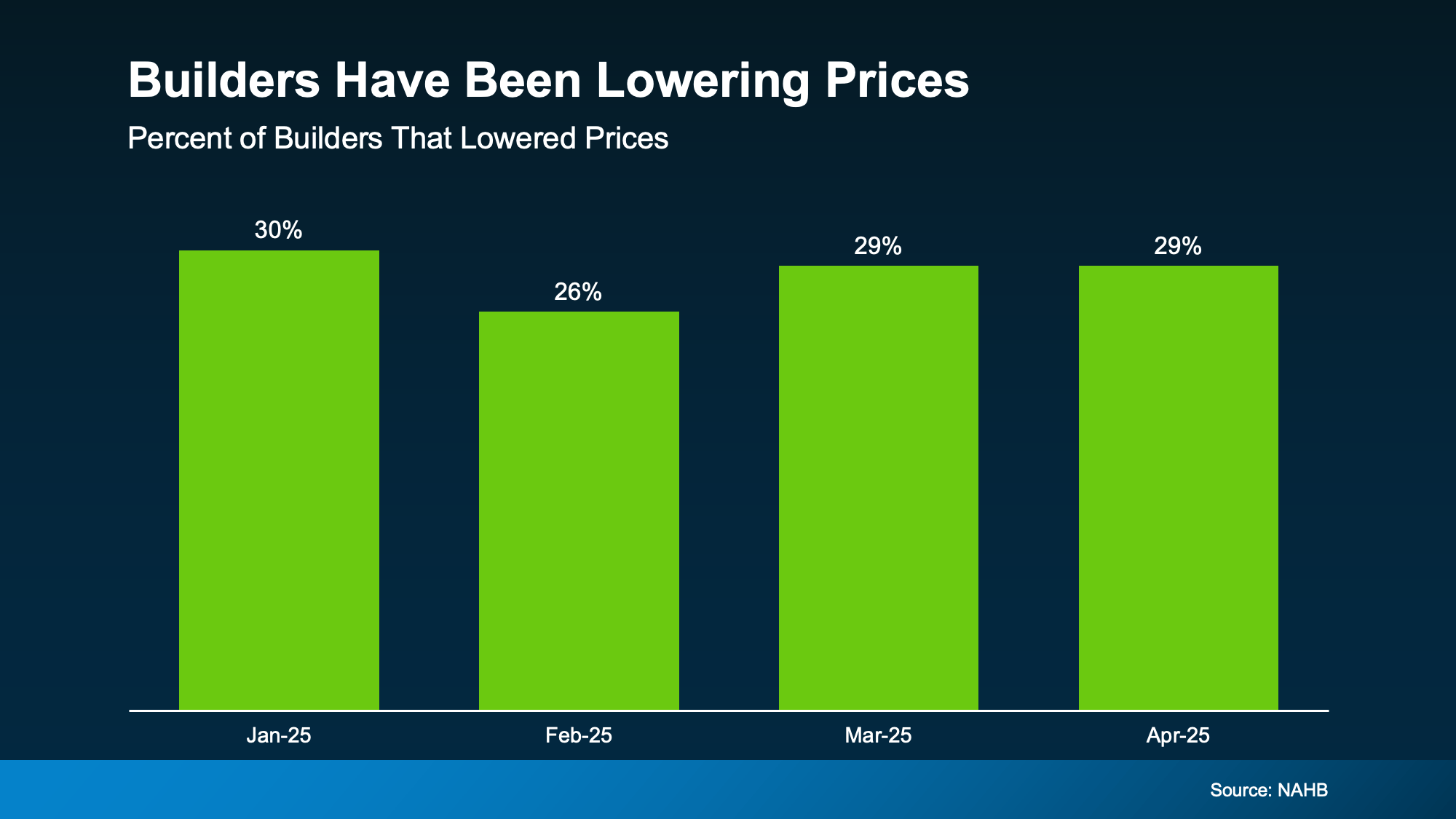
That’s because they don’t want to sit on inventory for too long. They want it to sell. And according to the National Association of Home Builders (NAHB), one of the strategies many builders are using to keep that inventory moving (and not just sitting) is a price adjustment (see graph below):

a graph of green rectangular barsAround 30% of builders lowered prices in each of the first four months of the year. While that also means most builders aren’t lowering prices, it also shows some are willing to negotiate with buyers to get a deal done.

This isn’t a sign of trouble in the market, it’s an opportunity for you. The fact that the majority of builders offer incentives and roughly 3 in 10 are lowering prices means if you’re looking at a newly built home, your builder will probably try to make it easier for you to close the deal. 

Existing Home Sellers Are Offering More, Too

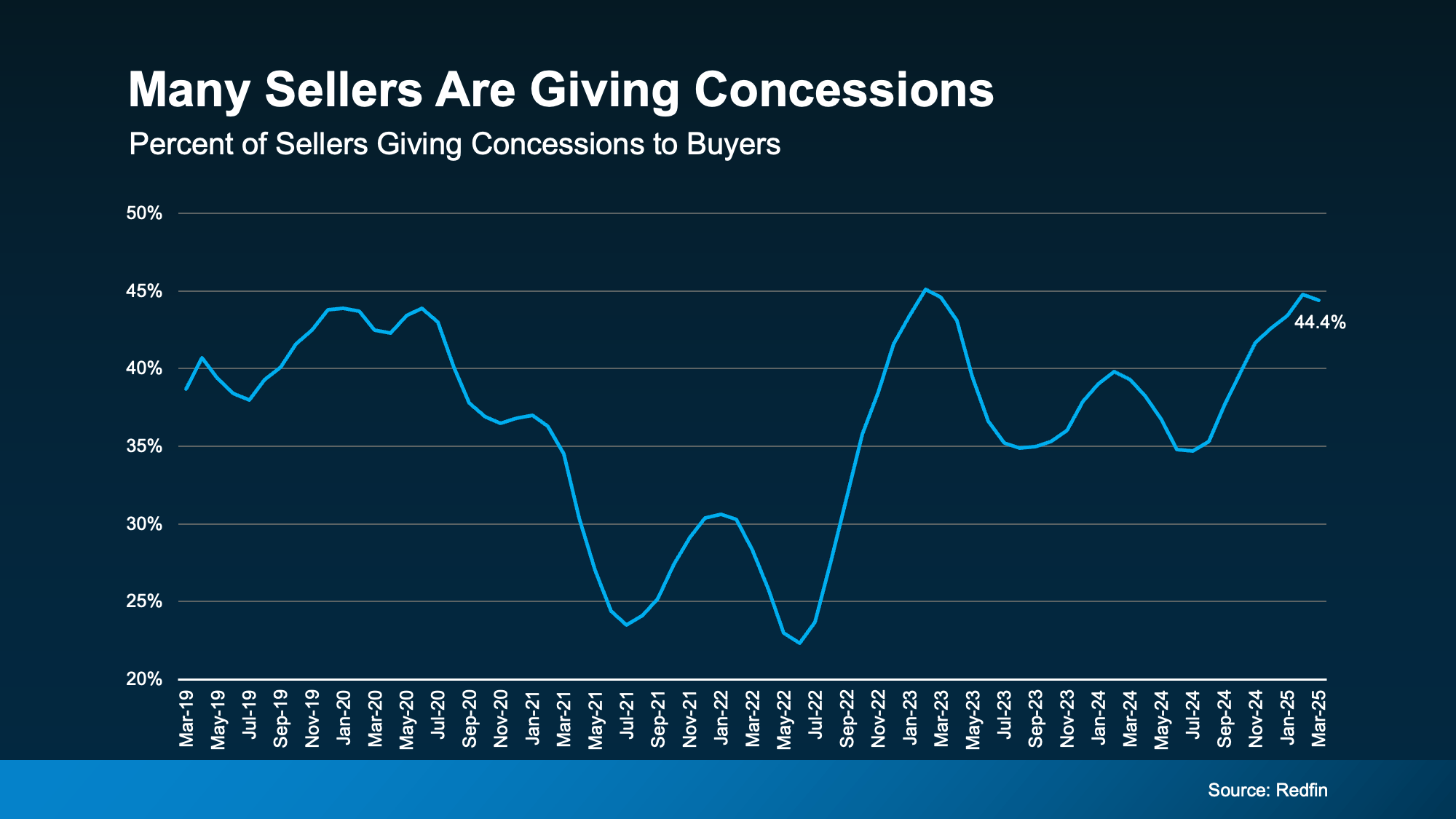
More existing homes (one that someone has lived in before) have been hitting the market, too – which means sellers are facing more competition. That’s why over 44% of sellers of existing homes gave concessions to buyers in March (see graph below):

a graph showing the price of a stock marketAnd, if you look back at pre-pandemic years on this graph, you’ll see 44% is pretty much returning to normal. After years of sellers having all the power, the market is balancing again, which can work in your favor as a buyer.

But remember, concessions don’t always mean a big discount. While more sellers are compromising on price, that’s not always the lever they pull. Sometimes it’s as simple as the seller paying for repairs, leaving appliances behind for you, or helping with your closing costs.

And considering that home values have risen by more than 57% over the course of the past 5 years, small concessions are a great way for sellers to make a house more attractive to buyers while still making a profit.

Bottom Line

Whether you’re looking at a newly built home or something a little older, there’s a good chance you can benefit from concessions or incentives.

If a seller or builder offered you something extra, what would make the biggest difference to help you move forward?

Let’s talk about it and see if it’s realistic based on inventory and competition in our local market.

The information contained, and the opinions expressed, in this article are not intended to be construed as investment advice. Derek Han and Keeping Current Matters, Inc. do not guarantee or warrant the accuracy or completeness of the information or opinions contained herein. Nothing herein should be construed as investment advice. You should always conduct your own research and due diligence and obtain professional advice before making any investment decision. Derek Han and Keeping Current Matters, Inc. will not be liable for any loss or damage caused by your reliance on the information or opinions contained herein.

Real Estate Tips April 13, 2025

House Hunting Just Got Easier – Here’s Why

If you’ve been frustrated by the lack of homes for sale over the past few years, here’s some good news. You have more options, so it may finally be time to kick off your home search again. As Daryl Fairweather, Chief Economist at Redfin, explains:

Now is the best time to buy in the last two years. Mortgage rates are comparable to what they were two years ago, and prices remain high. However, there is significantly more inventory . . .

The number of homes for sale has grown compared to last year, and even more options are on the way. While this is typical for the busy spring season, here’s why this is so important right now.

Homeowners are listing their houses at the highest pace we’ve seen in a while.

New Listings Are on the Rise

Over the past few months, the number of new listings, or homes that have recently been put on the market for sale, has been steadily rising (see graph below):

a graph of a number of blue and green barsBasically, more people are putting their homes on the market each month – whether they’re moving up, downsizing, or relocating. And this trend is a positive sign for the housing market.

Sellers who may have been on the fence the past few years are starting to jump back in. That’s helping to boost overall inventory and create better opportunities for both buyers and move-up sellers alike.

But it’s not just that the number of fresh options is up month-over-month; there’s also been a jump compared to last year.

According to Realtor.com, new listings in March were 10.2% higher than last year, making it the biggest March for new listings since 2021 (see graph below):

For anyone who’s been waiting for more choices, this is exactly what you’ve been hoping for – because more homes coming onto the market means more options and a better shot at finding one that fits your needs.


To make sure you don’t miss out on any of the latest listings for your area, lean on a local real estate agent.

Bottom Line

If you’re thinking about making a move this spring, now may be the time to start exploring your options. With more fresh listings hitting the market, you may find a home you love waiting for you.

What features or neighborhoods are at the top of your wish list?


The information contained, and the opinions expressed, in this article are not intended to be construed as investment advice.

Real Estate Tips March 14, 2025

Buying Your First Home? It’s Okay To Feel Nervous

Buying Your First Home? It’s Okay To Feel Nervous

Buying your first home is exciting, but let’s be real – it can also feel overwhelming. It’s a big step, and with that comes plenty of questions. Am I making the right decision? Can I really afford this right now? Will I be able to make ends meet if I have unexpected repairs? What if I lose my job?

Here’s the thing: every first-time homebuyer has these thoughts.

The homebuying process has always been a mix of excitement and nerves, and that’s completely normal. Here’s some information that can give you a bit of perspective, so you don’t have these concerns.

Focus on What You Can Control

Since homeownership is new to you, you’re probably feeling like it’s hard to know what to budget for. And that can be a bit scary. You’ll have the mortgage, home insurance, and maintenance to think about – maybe even lawn care or homeowner’s association (HOA) fees. It’s easy to let the dollar signs be overwhelming. As Zillow says:

“Buying a house is a big decision, and you might feel confused and indecisive as you assess your current financial situation and try to work through whether or not the timing is right. Making big life choices might come with some self-doubt, but crunching the numbers and thinking about what you want your life to look like will help guide you down the right path.

The important thing is to focus on what you can control. By partnering with a local agent and a trusted lender, you can get a clear understanding of what you can borrow for your home loan, what your monthly payment would be, and how your mortgage rate can impact it. And since that payment will likely be your biggest recurring expense, the key is to make sure the number works for you.

Don’t Stress About Repairs

The maintenance and repairs? Those can be a little bit harder to anticipate. But don’t forget you’ll get an inspection during the homebuying process to give you a better look at the condition of your future house. And with your inspection report in hand, you’ll have a good idea of what needs work. This way, you can start saving up so that you’re ready if and when something breaks.

But even then, if this is something that’s still really nagging at you, talk to your agent about asking the seller to throw in a home warranty. Those can cover repairs for some of the bigger systems in the house, like the HVAC, if they break within a specific time frame. While this isn’t a huge expense for the seller, the likelihood of a seller agreeing to one depends on what’s happening in your local market and how competitive it is right now.

It’s Okay To Stretch – Just Not Too Far

And remember, chances are that money will be a little tight – at least at first. And that’s kind of to be expected. A lot of times when someone buys their first home, they cut down on things like shopping and eating out for a while until they get a better idea of how their expenses will shake out in the new home.

But if you’re crunching the numbers and you won’t have enough money left for things like gas, food, etc. – it’s a sign you’d be stretching yourself too far. The last thing you want is to take on a payment that’s too much to handle. But stretching a little? That’s different. That’s normal.

Your Job Will Probably Change – And That’s Okay

And don’t forget, you’ll likely earn more down the road, so that slight stretch now won’t seem so bad as time wears on. As you advance in your career, you’ll probably start to make more money too. So, as your paycheck grows, the payments will get easier. Renting is a short-term option – and it’s one you deserve to get out of. Buying a home is a long-term play.

And just in case you’re worried about what happens if you do lose your job, you should know there are options, like forbearance, designed to help you temporarily pause payments on your home loan due to hardship.

Bottom Line

Buying your first home is a big decision, and it’s okay to feel a little nervous about it. But if you’re financially ready, don’t let fear keep you from moving forward. These emotions are normal, and great agents help their buyers get through them.

What makes you nervous when you think about buying your first home?

Let’s connect so you have an expert on your side to explain everything along the way.

Real Estate Tips February 15, 2025

The 3 Biggest Mistakes Sellers Are Making Right Now

The 3 Biggest Mistakes Sellers Are Making Right Now

If you want to sell your house, having the right strategies and expectations is key. But some sellers haven’t adjusted to where the market is today. They’re not factoring in that there are more homes for sale or that buyers are being more selective with their budgets. And those sellers are making some costly mistakes.

Here’s a quick rundown of the 3 most common missteps sellers are making, and how partnering with an expert agent can help you avoid every single one of them.

1. Pricing the Home Too High

According to a survey by John Burns Real Estate Consulting (JBREC) and Keeping Current Matters (KCM), real estate agents agree the #1 thing sellers struggle with right now is setting the right price for their house (see graph below):

a graph of salesAnd more often than not, homeowners tend to overprice their listings. If you aren’t up to speed on what’s happening in your local market, you may give in to the temptation to price high so you can have as much wiggle room as possible to negotiate. You don’t want to do this.

Today’s buyers are more cautious due to higher rates and tight budgets, and a price that feels out of reach will scare them off. And if no one’s looking at your house, how’s it going to sell? This is exactly why more sellers are having to do price cuts.

To avoid this headache, trust your agent’s expertise from day 1. A great agent will be able to tell you what your neighbor’s house just sold for and how that impacts the value of your home.

2. Skipping Repairs

Another common mistake is trying to avoid doing work on your house. That leaky faucet or squeaky door might not bother you, but to buyers, small maintenance issues can be red flags. They may assume those little flaws are signs of bigger problems — and it could cost you when offers come in lower or buyers ask for concessions. As Investopedia says:

Sellers who do not clean and stage their homes throw money down the drain. . . Failing to do these things can reduce your sales price and may also prevent you from getting a sale at all. If you haven’t attended to minor issues, such as a broken doorknob or dripping faucet, a potential buyer may wonder whether the house has larger, costlier issues that haven’t been addressed either.”

The solution? Work with your agent to prioritize anything you’ll need to tackle before the photographer comes in. These minor upgrades can pay off big when it’s time to sell.

3. Refusing To Negotiate

Buyers today are feeling the pinch of high home prices and mortgage rates. With affordability that tight, they may come in with an offer that’s lower than you want to see. Don’t take it personally. Instead, focus on the end goal: selling your house. Your agent can help you negotiate confidently without letting emotions cloud your judgment.

At the same time, with more homes on the market, buyers have options — and with that comes more negotiating power. They may ask for repairs, closing cost assistance, or other concessions. Be prepared to have these conversations. Again, lean on your agent to guide you. Sometimes a small compromise can seal the deal without derailing your bottom line. As U.S. News Real Estate explains:

“If you’ve received an offer for your house that isn’t quite what you’d hoped it would be, expect to negotiate . . . the only way to come to a successful deal is to make sure the buyer also feels like he or she benefits . . . consider offering to cover some of the buyer’s closing costs or agree to a credit for a minor repair the inspector found.”

The Biggest Mistake of All? Not Using a Real Estate Agent

Notice anything? For each of these mistakes, partnering with an agent helps prevent them from happening in the first place. That makes trying to sell your house without an agent’s help the biggest mistake of all.

Bottom Line

Avoid these common mistakes by starting with the right plan — and the right agent. Let’s connect so you don’t fall into any of these traps.

Real Estate Tips January 23, 2025

How Much Home Equity Have You Gained? The Answer Might Surprise You

How Much Home Equity Have You Gained? The Answer Might Surprise You

Have you ever stopped to think about how much wealth you’ve built up just from being a homeowner? As home values rise, so does your net worth. And, if you’ve been in your house for a few years (or longer), there’s a good chance you’re sitting on a pile of equity — maybe even more than you realize.

What Is Home Equity?

Home equity is the difference between what your house is worth and what you owe on your mortgage. For example, if your house is worth $500,000 and you still owe $200,000 on your home loan, you have $300,000 in equity. It’s essentially the wealth you’ve built through homeownership. Right now, homeowners across the country are seeing record amounts of equity.

According to Intercontinental Exchange (ICE), the average homeowner with a mortgage has $319,000 in home equity.

Why Have Homeowners Gained So Much Equity?

The rise in home equity over the years can be credited to two key factors:

1. Significant Home Price Growth

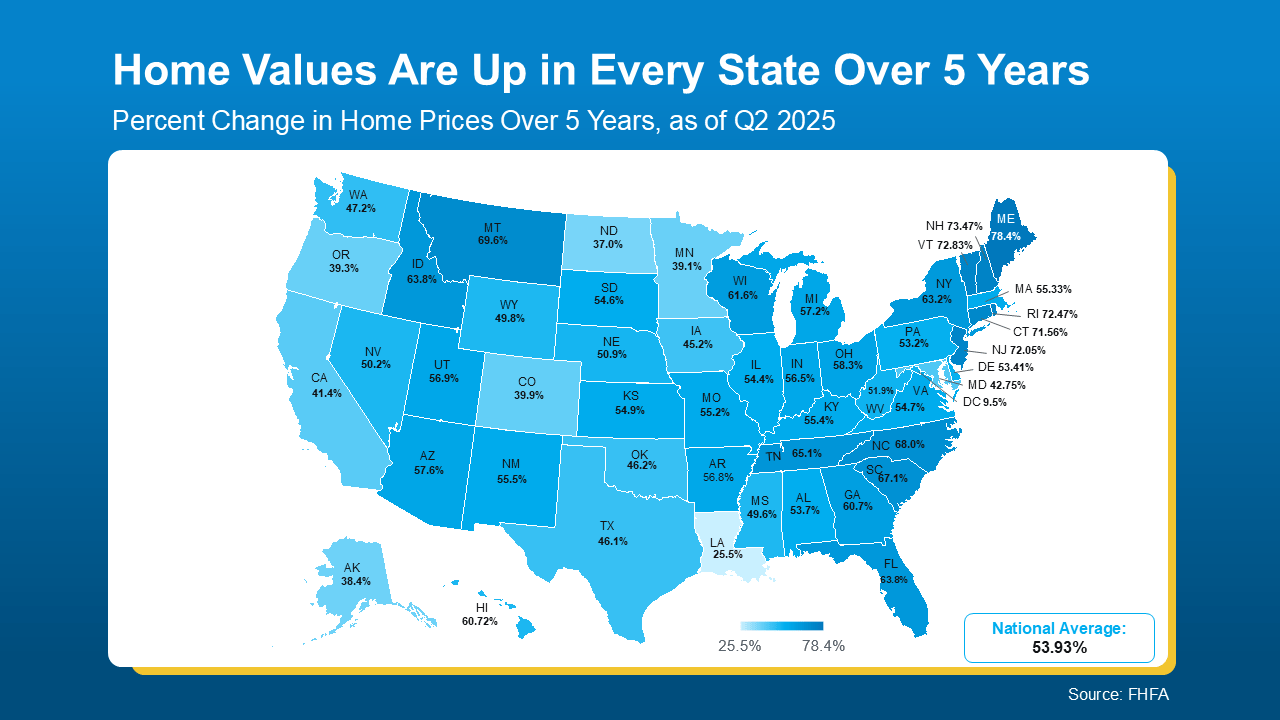
Home prices have climbed dramatically in recent years. In fact, according to the Federal Housing Finance Agency (FHFA), over the past five years, home prices nationwide have risen by 57.4% (see map below):

a map of the united statesThis appreciation means your house is likely worth much more now than when you first bought it.

2. Longer Tenure in Homes

Data from the National Association of Realtors (NAR) shows people are staying in their homes for a decade (see graph below):

a graph of numbers and a number of peopleThis increased tenure means homeowners benefit even more from home values growing over time. That’s because the longer someone has lived in their house, the more that home’s value has grown, which directly increases equity.

And if you’re one of those people who’s been in their home for 10 years or more, know this – according to NAR:

“Over the past decade, the typical homeowner has accumulated $201,600 in wealth solely from price appreciation.”

The Benefits of Having Home Equity

What does that mean for you? It means your house might be your biggest financial asset — and it could open up some exciting opportunities for your future. Let’s break it down.

  • Moving to Your Next Home

Your equity could help you cover the down payment for your next home. In some cases, it might even mean you can buy your next house all cash.

  • Financing Home Improvements

Thinking about upgrading your kitchen, adding a home office, or tackling other projects? Your equity can provide the funds to make those improvements happen, increasing your home’s value and making it more enjoyable to live in too.

  • Getting a Business Going

If you’ve been dreaming about starting your own business, your equity could be the kickstart you need. Whether it’s for startup costs, equipment, or marketing, leveraging your home’s value can help bring your entrepreneurial goals to life.

Bottom Line

Whether you’re thinking about selling, upgrading, or simply want to understand your options, your home equity is a powerful resource. If you’re wondering how much equity you’ve built or how you can use it to meet your goals, let’s connect and explore the possibilities.

Real Estate Tips November 5, 2024

Is a Fixer Upper Right for You?

Is a Fixer Upper Right for You?

Looking to buy a home but feeling like almost everything is out of reach? Here’s the thing. There’s still a way to become a homeowner, even when affordability seems like a huge roadblock – and it might be with a fixer upper. Let’s dive into why buying a fixer upper could be your ticket to homeownership and how you can make it work.

What Is a Fixer Upper?

A fixer upper is a home that’s in livable condition but needs some work. The amount of work varies by home – some may need cosmetic updates like wallpaper removal and new flooring, while others might require more extensive repairs like replacing a roof or updating plumbing.

Because they need some elbow grease, these homes typically have a lower price point, based on local market value. In fact, a survey from StorageCafe explains that fixer uppers generally cost about 29% less than move-in-ready homes.

And that’s why, according to a recent survey, more buyers are considering homes that need a little extra work right now (see below):

a blue and grey pie chartIf you’re looking for an option to get your foot in the door, and you’re willing to roll up your sleeves and do a bit of work, a house with untapped potential may be a good option.

Tips for Buying a Home That Needs Some Work

Before you buy a home that may need a makeover, here are a few things to keep in mind:

  • Choose a Good Location: You can repair a house, but you can’t change where it is. Make sure the home is in a neighborhood you like or one with increasing property values and a growing number of local amenities. This way, even after you spend money fixing it up, the house will be worth more later.
  • Budget for Surprises: Fixing up a house can take more time and money than you might think. Make sure you save room in your budget for unexpected repairs or other unknowns that might come up while you’re working on the house.
  • Get a Home Inspection: Before you buy, hire an inspector to check out the house. They’ll help you determine the necessary repairs, so you don’t end up with expensive surprises later.
  • Plan Your Priorities: When deciding what to tackle first, it helps to categorize your goals. Think of your home in three ways: the must-haves (essential repairs), the nice-to-haves (upgrades that would make life easier), and the dream-state features (luxuries you can add later). This will help you prioritize and stick to your budget.

Remember, the perfect home is the one you perfect after buying it. By starting with a fixer upper, you have the opportunity to customize a home to your liking while saving money on the initial purchase price. With careful planning, budgeting, and a little bit of vision, you can turn a house that needs some love into your perfect home.

Real estate agents are great at finding homes with potential. They know the local market and can guide you to homes where smart upgrades can add value. With their help, you’re more likely to find a house that fits your total budget and has room for worthwhile improvements.

Bottom Line

In today’s market, where the cost of homeownership can be intimidating, finding a move-in-ready home that fits your budget can feel like a real challenge. But if you’re open to putting in a little work, you can transform a fixer upper into your ideal home over time. Let’s explore what’s possible and find a place that’ll work for you.

Real Estate Tips October 18, 2024

Why Did More People Decide To Sell Their Homes Recently?

Why Did More People Decide To Sell Their Homes Recently?

Homeowners typically slow down their moving plans as the summer months wrap up, and as a result, fewer homes are listed for sale in the fall. It’s a predictable, seasonal trend in real estate. But this year, mortgage rates came down at the same time the number of homes on the market usually starts to decline. So, what happened? More homeowners decided to sell, so more homes came to the market.

The most recent data from Realtor.com reveals that in September, the number of homes put up for sale increased by 11.6% compared to this time last year.

As the green circle in the graph below shows, the typical September decline in homes coming to the market didn’t happen – that number actually went up (see graph below):

a graph of a number of homesRalph McLaughlin, Senior Economist at Realtor.com, explains why there was an unseasonable rise:

“This sharp increase is largely due to the decline in mortgage rates in mid-August, enticing homeowners to sell.”

So, as rates came down at the end of the summer, more people jumped into the market and decided to make their move.

What Does This Mean If You’re Looking To Buy a Home?

It means more fresh options to choose from than you’ve had in a while – not the ones that have been sitting around, unsold.

But keep in mind, mortgage rates have been volatile lately, ticking up slightly in recent weeks, which could limit the number of people who feel comfortable with the idea of selling in the months ahead. And in this market, it’s mortgage rates that are largely driving homeowner decisions.

Why Buy Now, Rather Than Wait?

Whether you’re looking for a starter home, an upgrade, or hoping to downsize, you have more homes to choose from right now. And if you can find what you’re looking for, know that these new, fresh options won’t be on the market forever. So, staying on top of what’s available in your local area with a trusted agent is key.

And remember, one month doesn’t make a trend. So, what does that mean going forward? Whether more homeowners than normal continue to put their houses on the market will largely depend on what happens with mortgage rates and the economic factors that impact them, like inflation, employment, and the reactions by the Federal Reserve.

With that in mind, now might be your moment, while more homes are available – if you’re ready, willing, and able to buy this fall.

Lawrence Yun, Chief Economist at the National Association of Realtors (NAR), explains:

“The rise in inventory – and, more technically, the accompanying months’ supply – implies home buyers are in a much-improved position to find the right home and at more favorable prices.”

Bottom Line

As rates came down at the end of the summer, sellers started to trickle back into the market, which means buyers have more choices right now. Let’s connect to make sure you have a trusted advisor to help you navigate the new options before they’re all scooped up.

Real Estate Tips September 21, 2024

Falling Mortgage Rates Are Bringing Buyers Back

Falling Mortgage Rates Are Bringing Buyers Back

If you’ve been hesitant to list your house because you’re worried no one’s buying, here’s your sign it may be time to talk with an agent.

After months of high rates keeping buyers on the sidelines, things are starting to shift. Rates are already coming down due to a number of economic factors. And yesterday the Federal Reserve cut the Federal Funds Rate for the first time since they began raising that rate in March 2022. And while they don’t control mortgage rates, this sets the stage for mortgage rates to fall even further than they already have – especially since more cuts from the Fed are expected into next year. And lower mortgage rates are bringing more buyers back into the market. Lisa Sturtevant, Chief Economist at Bright MLS, says:

“A drop in the cost of borrowing will help fuel more homebuyer demand . . . Falling rates will also bring more sellers into the market.”

The best part? You can take advantage of that renewed buyer interest.

As Rates Fall, Buyer Activity Goes Up

The graph below illustrates the relationship between falling mortgage rates and rising buyer activity. The orange line represents the average 30-year fixed mortgage rate, while the blue line shows the Mortgage Bankers Association (MBA) Mortgage Application Index, which tracks the number of mortgage applications.

As you can see, as mortgage rates (orange) come down, the Mortgage Application Index (blue) rises, showing more people start to re-engage in the process (see graph below):

What This Means for You

According to the National Association of Realtors (NAR), home sales increased in July, which was a welcome shift after four straight months of declines. If you’re a homeowner thinking about selling, this uptick in buyer activity works in your favor.

More buyers means more competition, which can lead to higher offers and shorter time on the market for your house. And, according to Edward Seiler, AVP of Housing Economics at the Mortgage Bankers Association (MBA), this trend is expected to continue:

“MBA is expecting that slower home-price appreciation, coupled with lower rates, will ease affordability constraints and lead to increased activity in the housing market.”

All in all, the market is becoming more accessible to a wider range of buyers, which could result in even more people looking to purchase a house like yours.

With more buyers entering the market, now’s the time to start getting your house ready to sell.

Bottom Line

The recent decline in mortgage rates is already driving more buyers into the market, and experts project this trend will continue. Let’s work together to take advantage of this increased buyer demand and get your house ready to sell.

Real Estate Tips August 8, 2024

Top 4 Factors to Consider When Choosing Your Mortgage

Top 4 Factors to Consider When Choosing Your Mortgage


With home prices and rates still relatively high, securing a mortgage can feel daunting––even to the most experienced borrowers. But don’t let that deter you: If other homebuyers’ experiences are any indication, odds are you’ll eventually find a home loan that works well for you.


In fact, most U.S. homeowners say they’re satisfied with the mortgage they received, according to a recent Bankrate survey. The vast majority of the surveyed homeowners (69%) said they’d buy their current home again if they had a do-over.1


The key to finding the right home loan for you is to look for one that you’ll feel comfortable with long after you’ve closed on your new property. In addition to comparing term lengths and mortgage rates, also consider how the loan will fit your daily life and preferences.


For example, we recommend asking yourself questions such as: Are you a natural risk taker, or do you prefer firm plans and predictability? Can you afford a bigger mortgage payment if interest rates increase, or are your anticipated home expenses already stretching your monthly budget?


To help you get started, we’ve rounded up four of the most important factors to consider when narrowing your list of potential mortgage options.


  1. Your Credit Score


That three-digit number that credit scoring companies like VantageScore and FICO assign not only influences your interest rate, but it also helps determine the type of mortgage you can get.


To secure a conventional mortgage from a major bank or credit union, you’ll typically need a FICO score of at least 620. But some mortgage types require even higher credit scores.2


For example, to qualify for a U.S. Department of Agriculture (USDA) loan to buy a qualifying rural property, you’ll need a minimum FICO score of 640. Or, if you’re seeking a supersized loan, such as a jumbo mortgage (which are home loans above $766,500 to $1,149,825, depending on where you buy the home), you may need a FICO score of at least 700 or more.2


You still have options, though, if your credit score is lower. You may be able to get a Federal Housing Administration (FHA) loan with a 580 credit score if you have enough cash saved for at least a 3.5% down payment. And if you have at least a 10% down payment, you may qualify even if your score is in the 500 to 579 range. Alternatively, if you’re a military service member, veteran or spouse, you may be able to get a U.S. Department of Veterans Affairs (VA) loan with little or no money down with a credit score in the 580 to 620 range.2,3


Some regional banks and credit unions may also be more flexible than others with minimum required credit scores.4 But if you can afford to wait, you may be better off paying down your debt first so your score can improve. The interest you save with a more competitively priced loan could enable you to buy a more desirable home.


  1. Your Income and Expenses


The amount of money you make, as well as how much you owe, will also influence your mortgage options.


Lenders like to see that you still have plenty of income left over after paying your expenses and generally prefer that you spend no more than 28% of your income on housing, or a maximum of 36% (which is the cap that federally-sponsored lenders Fannie Mae and Freddie Mac advise).5


A mortgage lender will also compare your expected income to the total amount of debt you’ll carry once you’ve bought the home.6 This is called your debt-to-income (DTI) ratio, and lenders consider it a key indicator of whether you can afford a particular mortgage. In fact, research by NerdWallet found that a high DTI ratio is the most common reason mortgage applications get rejected.6


In addition to outstanding debts, lenders factor in other expenses unique to a home, such as property taxes, homeowners insurance, and homeowner association fees. Your approval odds will be higher if you have a DTI ratio below 36%.7 But if you have great credit and ample cash, you may still be able to get a conventional loan with a DTI ratio in the 45% to 50% range.8 If not, you will likely need to look to other “non-conforming” loan types, such as government-backed mortgages.


With a FHA loan, for example, you may be able to get away with a DTI ratio of 43% to 57%, depending on your credit history and savings. Similarly, if you qualify for a VA loan, you may be able to get one with a DTI ratio of 41% or more. USDA loans, on the other hand, are a bit stricter. To get approved, your DTI ratio can’t be higher than 41% and your income must be below a certain threshold for your family type.6


  1. Your Expected Down Payment


The size of your down payment will also impact the type of mortgage you can get. You don’t have to put down 20% to qualify for a conventional mortgage, but you will need a significant amount. According to the National Association of Realtors, the median down payment amount in 2023 was 14%. For younger buyers under the age of 33, it was 8%.9


In some cases, a larger down payment may also help you qualify for loans you might not otherwise. For example, it can be tough to get a mortgage when you’re self-employed. But some conventional lenders may be willing to work with you if you put down more than 20%.10


If your cash reserves are slim, then you may want to consider an FHA loan instead, which only requires 3.5% down.11 Or, if you qualify for a USDA or VA loan, you may be able to skip the down payment altogether and buy your home with no money down except for a small funding fee.11


Keep in mind, though, that a smaller down payment will likely mean a larger monthly payment. Plus, you’ll not only pay more interest overall and be responsible for a larger principal, you’ll also need to take out mortgage insurance. Conventional loans require private mortgage insurance (PMI) if your down payment is below 20%, while FHA loans always require insurance.12


How much you spend on mortgage insurance will also vary, depending on the size and type of loan you choose, as well as your credit score and other factors. For example, FHA mortgage insurance premiums (MIPs) are generally more expensive than PMI and also require an upfront payment at closing on top of annual premiums.12 Insurance for adjustable rate mortgages (ARMs) also tends to be on the higher side.13


  1. Your Lifestyle and Risk Tolerance


In addition to your budget, one of the most important factors to consider when comparing mortgage options is your temperament.


For most Americans, a mortgage is a decades-long commitment. So it’s important to find one you can happily live with—and comfortably repay—for the long haul.


Most fixed rate mortgages, for example, are designed to last anywhere from 15 years to three decades or more, with 30-year mortgages being the most popular option.14 When you spread out your repayment over such a long period, monthly payment amounts are smaller, so you can slowly chip away at your debt at a leisurely pace. The catch is you also pay more in interest.


With a shorter mortgage term, by contrast, you pay less overall. But your monthly payment amount will also be much higher.15 For some homeowners, the long-term savings are worth it. But if keeping up with your mortgage requires significant lifestyle adjustments, then you may come to regret it.


Another way to lower your monthly payment in the short term is to choose an adjustable-rate mortgage (ARM) that offers a low fixed APR for a lengthy period (typically five, seven or 10 years) before changing to a variable rate.16 This can be an especially useful loan type if you only plan to stay in the home for a relatively short period. But buyer beware: ARMs can be risky if you don’t plan ahead for a higher interest rate.17


BOTTOMLINE


Regardless of the loan you choose, it pays to shop around and carefully compare terms. According to research by LendingTree, most homebuyers risk leaving money on the table by sticking with the first lender that they meet.18


Fortunately, we have a vetted list of mortgage professionals who can explain your options, answer your questions, and help you find the best loan to meet your needs. We can also develop a custom plan for securing a great home that fits your budget. Reach out when you’re ready to get started.


The above references an opinion and is for informational purposes only. It is not intended to be financial, legal, or tax advice. Consult the appropriate professionals for advice regarding your individual needs.


Sources:

  1. Bankrate –
    https://www.bankrate.com/mortgages/home-affordability-report/
  2. Bankrate –
    https://www.bankrate.com/real-estate/what-credit-score-do-you-need-to-buy-a-house/
  3. S. News & World Report – https://money.usnews.com/loans/mortgages/va-loans
  4. Newsweek –
    https://www.newsweek.com/vault/mortgages/bank-vs-credit-union-for-mortgages/
  5. Bloomberg – https://www.bloomberg.com/news/articles/2024-05-17/how-much-income-do-you-spend-budget-for-home-mortgage-in-us
  6. NerdWallet –
    https://www.nerdwallet.com/article/mortgages/debt-income-ratio-mortgage
  7. Bankrate –
    https://www.bankrate.com/mortgages/why-debt-to-income-matters-in-mortgages/
  8. Bankrate –
    https://www.bankrate.com/mortgages/how-interest-rates-are-set/
  9. National Association of Realtors – https://www.nar.realtor/sites/default/files/documents/2023-home-buyers-and-sellers-generational-trends-report-03-28-2023.pdf
  10. Bankrate –
    https://www.bankrate.com/mortgages/self-employed-how-to-get-a-mortgage/
  11. Bankrate –
    https://www.bankrate.com/mortgages/no-down-payment-mortgage/
  12. CFPB – https://www.consumerfinance.gov/ask-cfpb/what-is-mortgage-insurance-and-how-does-it-work-en-1953/
  13. Bankrate – https://www.bankrate.com/mortgages/basics-of-private-mortgage-insurance-pmi/
  14. MPA Magazine – https://www.mpamag.com/us/mortgage-industry/guides/the-7-most-popular-types-of-mortgage-loans-for-home-buyers/255499
  15. Investopedia – https://www.investopedia.com/articles/personal-finance/042015/comparison-30year-vs-15year-mortgage.asp
  16. NerdWallet –
    https://www.nerdwallet.com/article/mortgages/adjustable-rate-mortgage-arm
  17. Federal Reserve Bank of St. Louis – https://www.stlouisfed.org/on-the-economy/2024/feb/which-households-prefer-arms-fixed-rate-mortgages
  18. LendingTree –
    https://www.lendingtree.com/home/mortgage/shopping-around-survey/
Real Estate Tips July 6, 2024

7 Weekend Projects to Boost Your Property Value

7 Weekend Projects to Boost Your Property Value

Whether you’re putting your home on the market in a few weeks or a few years, strategic upgrades can make all the difference. But you don’t have to embark on a major remodel to make a significant improvement.


Even minor updates can have a big impact on your home’s aesthetic, and certain renovations can even boost its future sale price.


From curb appeal to interior updates, here are seven weekend projects that will enhance your home’s current charm and long-term value.


  1. Freshen Your Front Door


Is your front door looking a little tired? A new coat of paint can make your home more inviting to today’s guests and tomorrow’s buyers.


But before you grab that paintbrush, think carefully about your choice of hue. According to a recent study, the color of your front door can boost—or lower—your home’s sale price by thousands of dollars.1


Cement gray, for instance, was found to decrease purchase offers by an average of $3,365. Going too bold can also deter home shoppers. The safest bets? Classic black or a mid-tone brown are proven winners.1


Need help choosing the perfect paint or stain for your front door? We’d be happy to offer advice or refer you to a design professional for assistance.


  1. Upgrade Your Hardware and Lighting


It’s easy to overlook dated cabinet pulls or dingy light switches in your own home. But those seemingly minor details can leave a bad impression on visitors.


Swapping out old hardware for modern alternatives can easily and affordably elevate your space. New cabinet handles, for example, are relatively inexpensive and require just a few minutes and a screwdriver to install. To maximize the longevity of your update, consider classic shapes and finishes like brass knobs or nickel cup pulls.2


Take a look at your light fixtures, too. Try replacing an out-of-style chandelier with a more contemporary option. Even just updating your lampshades and lightbulbs can create a brighter, more welcoming space.  Additionally, many experts agree that high-quality lighting can show off your property’s best features when it comes time to sell.3


Uncomfortable changing a light fixture yourself? Contact us for a referral to a licensed electrician for help.


  1. Update Your Bathroom Fixtures


Bathrooms can show their age quickly, but a few inexpensive updates can take years off in just a few hours. And since many buyers will be more drawn to a home that feels clean and modern, even small changes can make a big difference.


According to one study, for every dollar you spend on minor cosmetic upgrades—like swapping out the bathroom mirror, upgrading hardware, or refinishing cabinets—you’ll see a $1.71 increase in your home’s value.4


Bathroom hardware is a great place to start. Consider updating your faucets and showerheads (we recommend lower-flow options to save money and the environment), and don’t forget about towel racks, toilet paper holders, and any other fixtures that look worn or discolored.5


If you want to stay on-trend, the most popular faucet finishes are currently black, nickel, and pewter. Spa-like upgrades, like steam showers and rain showers, are also in high demand.5,6


If your existing vanity is in poor condition, installing a new one is a slightly bigger project, but it has a huge impact on the look and feel of the room. Reach out for a list of retailers who carry high-quality but affordable prefabricated options.


  1. Give Your Kitchen Cabinets a Makeover


The kitchen is often referred to as the heart of the home, so it’s no surprise that an updated kitchen is a top priority for current homeowners and potential buyers alike.7,8 If your kitchen cabinets are from another era, that’s probably the first place you’ll want to start.


Fortunately, you don’t need to commit to the hassle and expense of installing new cabinets if your current ones are in good shape. Instead, consider painting them.


Not only is it more affordable and eco-friendly than replacement, but Better Homes and Gardens reports that this option typically offers a greater return on investment.9 When it comes to choosing the right color, warm neutrals and shades of green and blue are especially on-trend.10


Thinking about painting your cabinets yourself? Be sure to plan in advance and block out at least a couple of days for the project. You’ll need to take off all your cabinet doors and hardware and thoroughly cover your kitchen appliances and counters. You’ll also need to wait for the doors to dry before reassembling your kitchen.11


If you’re not confident in your painting skills, hiring a professional will still be far less expensive than installing new cabinets. We’re happy to refer you to capable painters in our network.


  1. Look at Your Landscaping


First impressions matter, and putting some work into your home’s exterior can make a big difference in how your guests and neighbors view it. Curb appeal can also make or break a potential buyer’s perception of your home—and significantly impact their offer.


According to HomeLight, buyers will pay 7% more, on average, for a home with good curb appeal. And in some areas, the return on investment for improvements can exceed 300%.12


One of the best ways to improve curb appeal is through landscaping—and it doesn’t have to be elaborate. First and foremost, focus on keeping things neat, tidy, and welcoming. Mow your lawn, refresh any mulch, prune overgrown shrubs, and add pops of color with flowers. To take things up a notch, add outdoor lighting and plant perennial flowers along the sides of your walkway.


When you’re ready to get started, reach out for a list of our favorite local garden centers where you can find all the necessary supplies.


  1. Refinish Your Wood Floors


For many buyers, wood floors are a huge selling point. Unfortunately, they also tend to get scuffed and worn over time, especially if you have kids or pets.


The good news? If your wood floors could use a touch-up, it’s well worth the time and cost. According to the National Association of Realtors, it’s the project that pays off the most in terms of resale value, with an average 147% return on investment.13


If you have a few days to devote to your floors, you can rent the necessary equipment from a local hardware store. While you’re there, pick up some basic supplies, like a putty knife, paintbrushes, sandpaper, and stain.14 And if you want to modernize your space, opt for a lighter wood tone, which is the current trend.15


Of course, we’re also happy to provide the names of trusted professionals who can tackle the work for you.


  1. Clean or Replace Your Grout


Let’s face it: Whether it’s on a kitchen floor or a bathroom wall, grout gets grimy over time, even with regular cleaning. Fortunately, refreshing your grout is a relatively simple and affordable project that can yield impressive results.


According to Apartment Therapy, grout that’s in poor condition is often one of the first things a potential buyer notices when they tour a bathroom.16 Fresh, clean grout, on the other hand, makes your bathroom sparkle—and that can pay off in a big way in terms of buyer’s perceptions.


If your grout is simply stained, a focused cleaning session can make a big difference. Try a specialized product or a simple mix of baking soda, water, and hydrogen peroxide.16 If the grout is cracked, crumbling, or stained beyond repair, it’s time to replace it. Luckily, the right tools make that a very doable DIY project, even if it can get messy—and it’s a lot easier and less expensive than retiling.17


No time to tackle it yourself? Reach out for a recommendation of a pro who can help.


CHOOSING THE PROJECT THAT’S RIGHT FOR YOU


Embarking on home improvements can be exciting, but it’s essential to choose projects that align with your goals, budget, and skill level. Whether you’re preparing to sell your home or simply want to enhance its value, there are projects to suit every homeowner.


If you’re unsure where to start, don’t hesitate to reach out for personalized advice and recommendations. With the right approach, you can unlock your home’s full potential and enjoy the rewards for years to come.


The above references an opinion and is for informational purposes only. It is not intended to be financial, legal, or tax advice. Consult the appropriate professionals for advice regarding your individual needs.


Sources:

  1. Zillow –
    https://www.zillow.com/learn/what-color-paint-front-door/
  2. Martha Stewart –
    https://www.marthastewart.com/kitchen-hardware-trends-8563764
  3. The Spruce –
    https://www.thespruce.com/expert-home-lighting-tips-8302722
  4. Zillow –
    https://www.zillow.com/learn/roi-for-bathroom-remodel/
  5. Forbes –
    https://www.forbes.com/home-improvement/bathroom/easy-quick-bathroom-updates/
  6. Real Simple –
    https://www.realsimple.com/nkba-bathroom-design-trends-2024-8403788
  7. Houzz –
    https://www.houzz.com/magazine/2024-u-s-houzz-and-home-study-renovation-trends-stsetivw-vs~174492310
  8. National Association of Realtors –
    https://www.nar.realtor/magazine/real-estate-news/survey-buyers-judge-a-home-by-its-kitchen
  9. Better Homes and Gardens –
    https://www.bhg.com/kitchen/remodeling/planning/kitchen-upgrades-cost-value/
  10. House Beautiful –
    https://www.housebeautiful.com/room-decorating/colors/g46105350/kitchen-paint-color-trends-2024/
  11. HGTV –
    https://www.hgtv.com/design/rooms/kitchens/best-way-to-paint-kitchen-cabinets
  12. Homelight –
    https://www.homelight.com/blog/what-upgrades-increase-home-value/
  13. National Association of Realtors –
    https://www.nar.realtor/magazine/real-estate-news/stub-for-148394
  14. Architectural Digest –
    https://www.architecturaldigest.com/story/refinishing-hardwood-floors
  15. Houzz –
    https://www.houzz.com/magazine/5-new-trends-in-flooring-for-2024-stsetivw-vs~173560747
  16. Apartment Therapy –
    https://www.apartmenttherapy.com/outdated-bathroom-features-37131219
  17. Better Homes and Gardens –
    https://www.bhg.com/how-to-regrout-tile-7554710